
Does Microneedling Really Rebuild Collagen? The Evidence
Microneedling is one of the few aesthetic treatments with histologic evidence behind the collagen claim. The evidence is real, and it is narrower than the marketing.
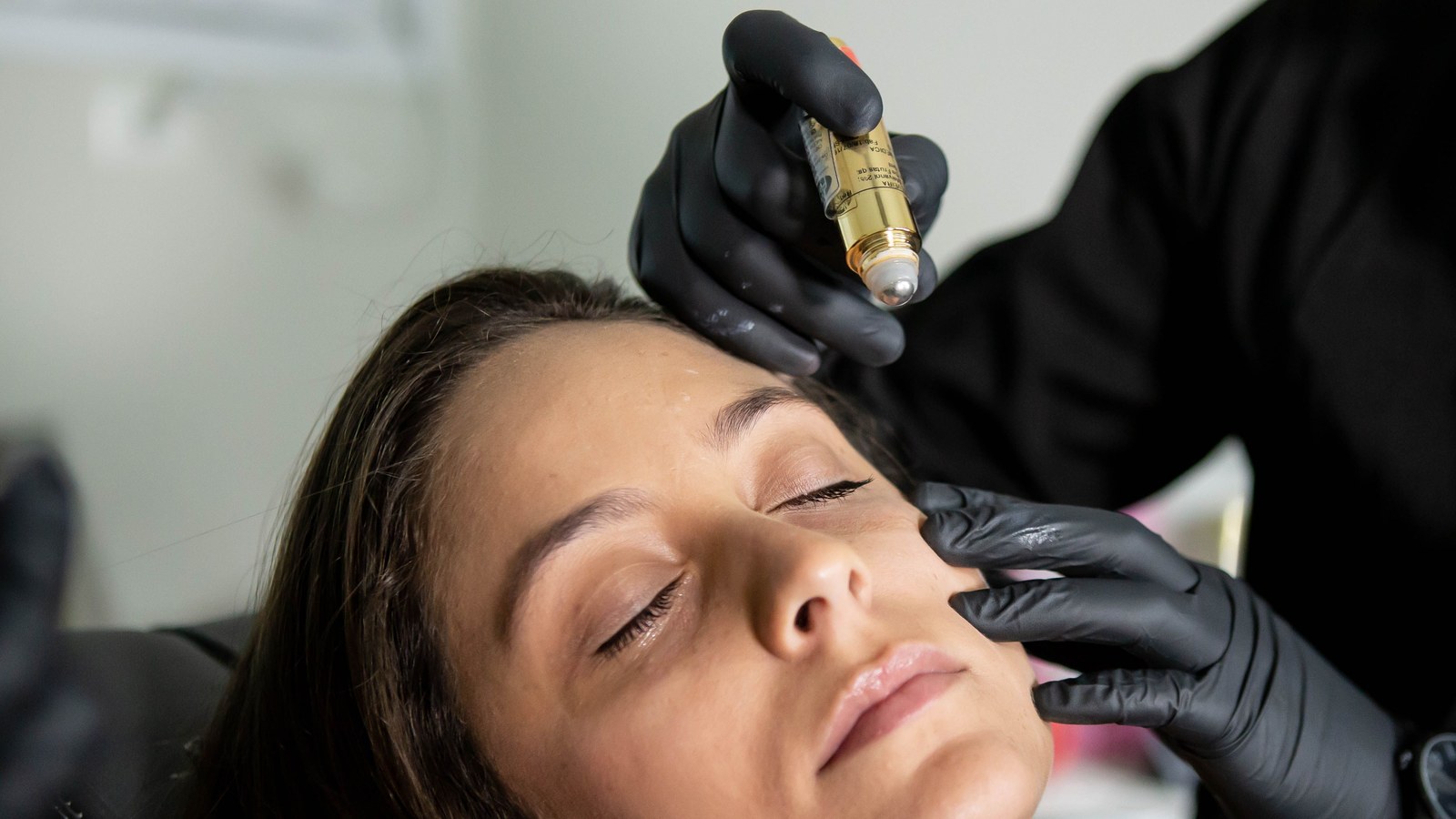
Microneedling is marketed as collagen induction therapy, which invites a fair question: is that a description of a mechanism or a description of a hope? It is one of the few aesthetic treatments where the answer rests on tissue evidence rather than patient satisfaction surveys, so it is worth walking through what the studies actually show.
See the Regenerative Glow Protocol™ PRP facial
The proposed mechanism
Microneedling creates thousands of controlled microchannels through the epidermis into the papillary dermis. Each is a small, sterile, precisely bounded injury. The body responds with the standard wound-healing cascade: platelet degranulation and growth factor release, an inflammatory phase, then a proliferative phase in which fibroblasts migrate in and deposit new extracellular matrix, then a remodeling phase lasting months in which that matrix is reorganized and cross-linked.
The clever part is what the treatment does not do. Because the channels are narrow and the surrounding tissue is left intact, healing proceeds without the scarring that a broader wound would produce. The result is deposition of new collagen in an intact architecture, rather than repair of a defect.
What the biopsy studies show
This is where microneedling separates itself from treatments supported only by patient reports. Multiple studies have taken skin biopsies before and after a microneedling series and examined them histologically. They consistently report increased collagen deposition, with several documenting substantial increases in collagen and elastin content in the months following treatment, alongside measurable thickening of the epidermis and reorganization of dermal collagen bundles.
Studies in acne scarring, where the outcome is easier to grade objectively, report meaningful improvement across a series of three to six sessions in most participants. The literature is not enormous and study sizes tend to be modest, but the direction of the evidence is consistent, which is more than can be said for a number of treatments sold with greater confidence.
What the evidence does not support
It does not support the idea that one session produces lasting structural change. Every credible protocol uses a series, typically three to six sessions spaced four to six weeks apart, because each treatment contributes an increment of remodeling.
It does not support at-home derma rollers as an equivalent. Needle depth, sterility, and control are the variables that separate collagen induction from surface irritation, and home devices that reach the papillary dermis in untrained hands are a genuine infection and scarring risk rather than a bargain.
It also does not support microneedling as a treatment for significant laxity. Collagen induction improves the look of texture, fine lines, pore appearance, scarring, and overall dermal quality. It does not lift tissue that has descended. When a patient's primary concern is laxity rather than quality, saying so plainly at the consultation saves everyone a disappointing series.
Where PRP changes the equation
PRP is prepared from the patient's own blood and concentrates the platelets that carry growth factors central to wound healing. Applied into the microchannels immediately after needling, it delivers those signals directly into the window when fibroblasts are being recruited.
The evidence for the combination is encouraging without being overwhelming: several controlled comparisons in acne scarring report better outcomes for microneedling with PRP than for microneedling alone. It is a reasonable addition for patients who want to maximize a series, and it is honest to describe the added benefit as incremental rather than transformative.
What patients realistically see
Immediately after a session, skin is pink and feels tight, similar to a moderate sunburn, typically for twenty-four to seventy-two hours. There is often a brief glow at the end of the first week that is hydration and inflammation rather than collagen, and it fades.
The real change arrives on the biology's schedule. Texture and tone begin shifting around weeks six to eight. The clearest difference from a series usually reads at twelve to sixteen weeks after the final session, and remodeling continues quietly beyond that. Patients evaluating results at two weeks are looking at the wrong point in the process.
Photographs shared by our practice are unretouched and represent individual results. Response varies with age, skin condition, and, importantly, with the internal factors that govern healing. A patient whose thyroid function or protein intake is limiting repair will get less from an identical series, which is a large part of why we evaluate those factors before recommending one.
How we use it in practice
Microneedling is the mechanical component of a broader plan rather than a standalone offering. It pairs with PRP for growth factor support, follows barrier repair when the skin needs it first, precedes facial laser rather than competing with it, and is held between sessions by physician-directed topical care.
That sequencing is the practical content of the Collagen Rebuild Protocol, and it is why we describe the plan as one thing rather than a menu. The evidence for microneedling is good. It is better when the treatment is positioned correctly within a plan built for the patient in front of us.
Frequently Asked Questions
- Does microneedling really produce new collagen?
- Yes. Biopsy studies before and after a microneedling series consistently show increased collagen and elastin deposition and reorganized dermal collagen. It is one of the better-evidenced collagen-stimulating treatments in aesthetic medicine.
- How many sessions are needed?
- Most protocols use three to six sessions spaced four to six weeks apart. A single session produces a temporary glow rather than lasting structural change.
- Is at-home microneedling equivalent?
- No. Needle depth, sterility, and control determine whether the treatment induces collagen or simply irritates the surface, and home devices at dermal depths carry real infection and scarring risk.
- Will microneedling tighten sagging skin?
- It improves the look of texture, fine lines, scarring, and dermal quality. It does not lift tissue that has descended. Where laxity is the main concern we say so and discuss the appropriate options instead.
Dr. Anna Frisch, MD, PhD
Board-Certified Endocrinologist | Emory University School of Medicine-trained physician-scientist | Medical Director, Palm Beach Cosmetic Medicine | Founder, VitellaMD, Palm Beach Thyroid & Endocrinology Wellness, and Frisch Integrative Medicine
Dr. Anna Frisch, MD, PhD, is a board-certified endocrinologist, Emory University School of Medicine-trained physician-scientist, Medical Director of Palm Beach Cosmetic Medicine, and founder of VitellaMD, Palm Beach Thyroid & Endocrinology Wellness, and Frisch Integrative Medicine. Her research is cited internationally, and she brings decades of experience in endocrinology, thyroid disorders, hormones, metabolic health, and patient-centered care. At Palm Beach Cosmetic Medicine, Dr. Frisch applies her medical background to aesthetic wellness by looking beyond the surface, connecting skin health, hair health, hormone balance, metabolic wellness, nutrition, collagen support, and advanced cosmetic treatments to help patients look refreshed, confident, and natural.
Not sure where to start?
Get your complimentary Skin IQ: a physician-led AI skin analysis with personalized recommendations in minutes.


Refined, physician-led cosmetic care in Wellington.
Schedule a private consultation to design a treatment plan around your skin, your goals, and the way you want to look and feel.