

Collagen banking is a marketing phrase attached to a legitimate clinical idea: that maintaining collagen is considerably easier than replacing it, so intervening before significant loss occurs produces a better long-term result. The idea holds up. What does not hold up is the implication that you can deposit collagen the way you deposit money and withdraw it at sixty.
What the term means, and what it does not
The accurate version is this. Collagen you still have is easier to keep than collagen you have lost, because maintaining a functioning dermal structure requires less biological work than rebuilding a degraded one. Preventive treatment in your thirties and forties keeps fibroblasts active during the years when they still respond briskly, and it prevents the sun-driven degradation that otherwise accumulates unopposed.
The inaccurate version implies storage. Collagen is a living tissue in constant turnover, not a reserve in a vault. A microneedling series at thirty-five does not sit in an account waiting for you. What it does is keep the tissue in better condition through the decade, so that at forty-five you are starting from a higher baseline. That is a real and worthwhile advantage. It is just not a deposit.
Why the thirties and forties are the productive window
Fibroblast responsiveness declines with age. A stimulating treatment delivered to a thirty-eight-year-old dermis produces more new collagen than the identical treatment delivered to the same person at sixty, because the cells doing the work are more numerous and more reactive. This is the single strongest argument for treating earlier: not vanity, efficiency.
There is a second reason specific to women. The perimenopausal transition removes a meaningful amount of estrogen-driven fibroblast support, and the studies here are striking: a substantial share of dermal collagen is lost in the first years after menopause. Entering that transition with better-conditioned skin changes how visible the drop is. Patients who begin in their forties tend to describe the change as gradual. Patients who begin afterward often describe it as sudden.
What actually works in this window
Sun protection is the highest-return intervention and it is not close. Ultraviolet exposure both degrades existing collagen and suppresses new synthesis, so unprotected sun in South Florida undoes preventive work faster than any treatment schedule can replace it. Daily broad-spectrum protection is the foundation of any banking strategy that means anything.
A physician-directed topical regimen comes next. Retinoids have the most consistent evidence for increasing dermal collagen among topicals, and a properly titrated regimen builds tolerance without the barrier damage that makes people abandon them. This is daily, cumulative, and inexpensive relative to its effect.
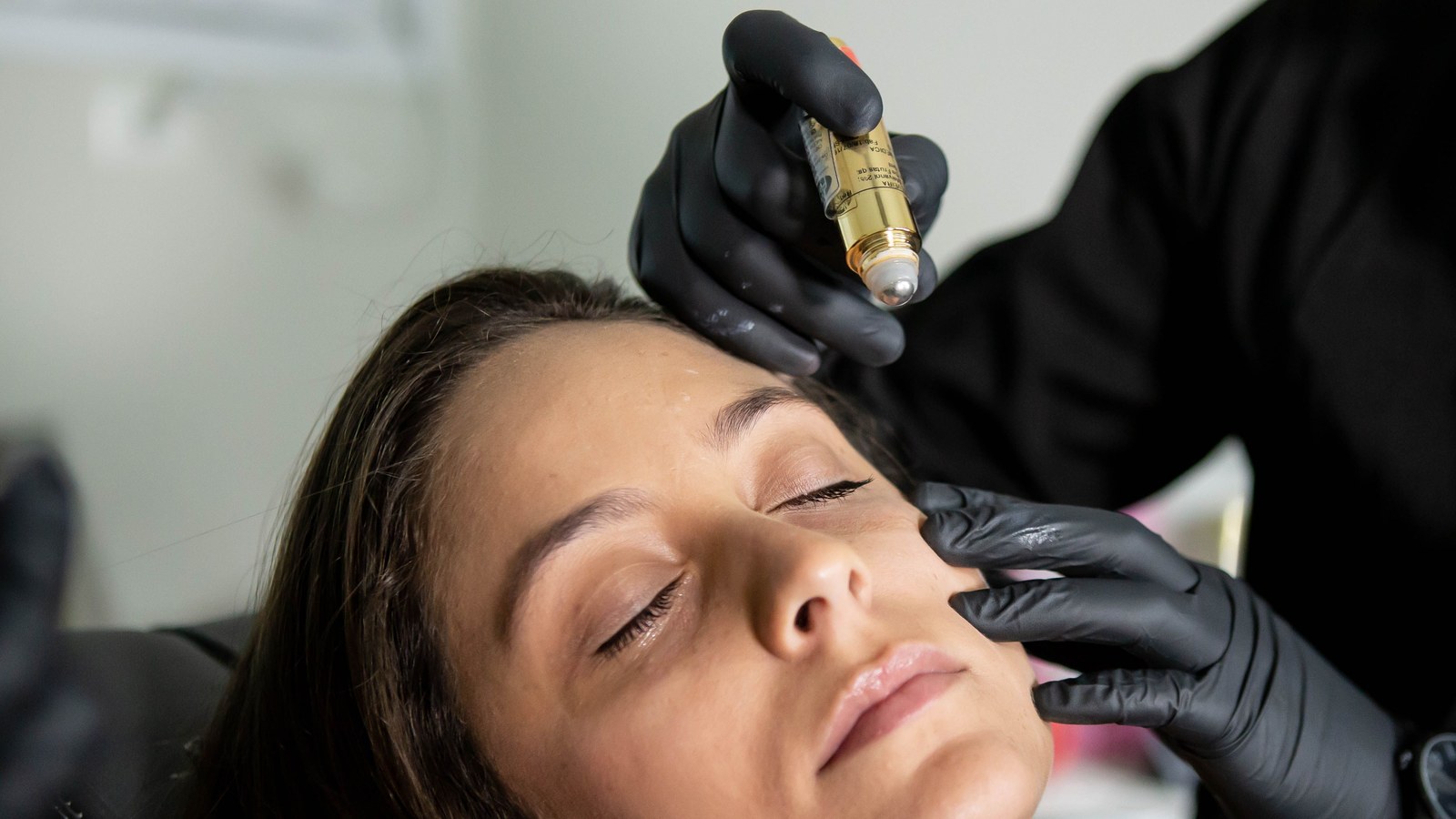
Then the in-office stimulus. Microneedling is the workhorse of preventive collagen treatment: controlled micro-injury that recruits fibroblasts, with modest downtime and good tolerance across skin types. Adding PRP delivers concentrated growth factors into the same healing window. Facial laser addresses the pigment and vascular changes that make skin read as older even when its structure is fine. A typical preventive rhythm is a short series once or twice a year rather than continuous treatment.
What is oversold
Aggressive treatment in your late twenties, in the absence of any concern, generally is. Skin at that age is producing collagen adequately, and there is no evidence that pre-emptive stimulation of healthy young dermis buys anything meaningful. Prevention is a reasonable idea applied at the wrong point on the curve.
So are annual packages purchased in advance. Skin changes, life changes, and a plan bought in January is frequently the wrong plan by August. Plans here are built as a series with maintenance set in advance for this reason, and your physician gives you the full plan and the full cost at consultation, before anything is booked. And any claim of a permanent result should be read carefully, because collagen turnover does not stop, which is precisely why maintenance is the whole concept.
The internal side of banking
The endocrine contributors matter as much in prevention as in correction. A thirty-eight-year-old with untreated hypothyroidism, chronic sleep restriction, or early insulin resistance is losing collagen faster than her age would predict, and no treatment schedule fully compensates for that. This is the part of a preventive plan that a purely aesthetic assessment does not capture.
It is also the part patients find most useful, because the findings tend to explain other symptoms they had filed separately. Skin is often the first tissue to report a systemic problem, simply because it is the one you look at every morning.
A realistic preventive plan
For most patients in their thirties and forties, a sensible structure looks like this: disciplined daily sun protection, a physician-directed topical regimen used consistently, a short microneedling series once or twice yearly with PRP added where appropriate, facial laser as needed for pigment, and an honest look at thyroid, metabolic, and sleep factors. Sequenced together, that is what the Collagen Rebuild Protocol does in a preventive configuration.
Results photographs shared by our practice are unretouched and reflect individual outcomes. Preventive work is, by nature, harder to photograph than correction, because the win is a change that did not happen. The patients who value it most are usually the ones comparing themselves to their own trajectory rather than to someone else's before-and-after.
Frequently Asked Questions
- What age should I start collagen banking?
- Most patients get the best return beginning in their mid-thirties, when collagen production has measurably declined but fibroblasts still respond briskly. Starting in the late twenties without a specific concern is generally treating a problem that has not begun.
- How often do preventive treatments need to be repeated?
- A short series once or twice a year suits most preventive plans, alongside daily topical support. Correction of established laxity requires a denser schedule than maintenance does.
- Is collagen banking permanent?
- No, and any practice claiming otherwise is overstating it. Collagen turnover continues throughout life. The benefit is a better baseline entering each subsequent decade, which is meaningful but requires maintenance.
- Does this help before menopause specifically?
- It appears to. A substantial share of dermal collagen is lost in the years immediately following menopause, so entering that transition with better-conditioned skin makes the change less abrupt.
Dr. Anna Frisch, MD, PhD
Board-Certified Endocrinologist | Emory University School of Medicine-trained physician-scientist | Medical Director, Palm Beach Cosmetic Medicine | Founder, VitellaMD, Palm Beach Thyroid & Endocrinology Wellness, and Frisch Integrative Medicine
Dr. Anna Frisch, MD, PhD, is a board-certified endocrinologist, Emory University School of Medicine-trained physician-scientist, Medical Director of Palm Beach Cosmetic Medicine, and founder of VitellaMD, Palm Beach Thyroid & Endocrinology Wellness, and Frisch Integrative Medicine. Her research is cited internationally, and she brings decades of experience in endocrinology, thyroid disorders, hormones, metabolic health, and patient-centered care. At Palm Beach Cosmetic Medicine, Dr. Frisch applies her medical background to aesthetic wellness by looking beyond the surface, connecting skin health, hair health, hormone balance, metabolic wellness, nutrition, collagen support, and advanced cosmetic treatments to help patients look refreshed, confident, and natural.
Not sure where to start?
Get your complimentary Skin IQ: a physician-led AI skin analysis with personalized recommendations in minutes.


Refined, physician-led cosmetic care in Wellington.
Schedule a private consultation to design a treatment plan around your skin, your goals, and the way you want to look and feel.