Collagen and Menopause: Why Skin Changes and What Helps
Patients describe menopausal skin change as sudden, and they are not imagining it. The collagen loss in the first postmenopausal years is unlike any other period in adult life.
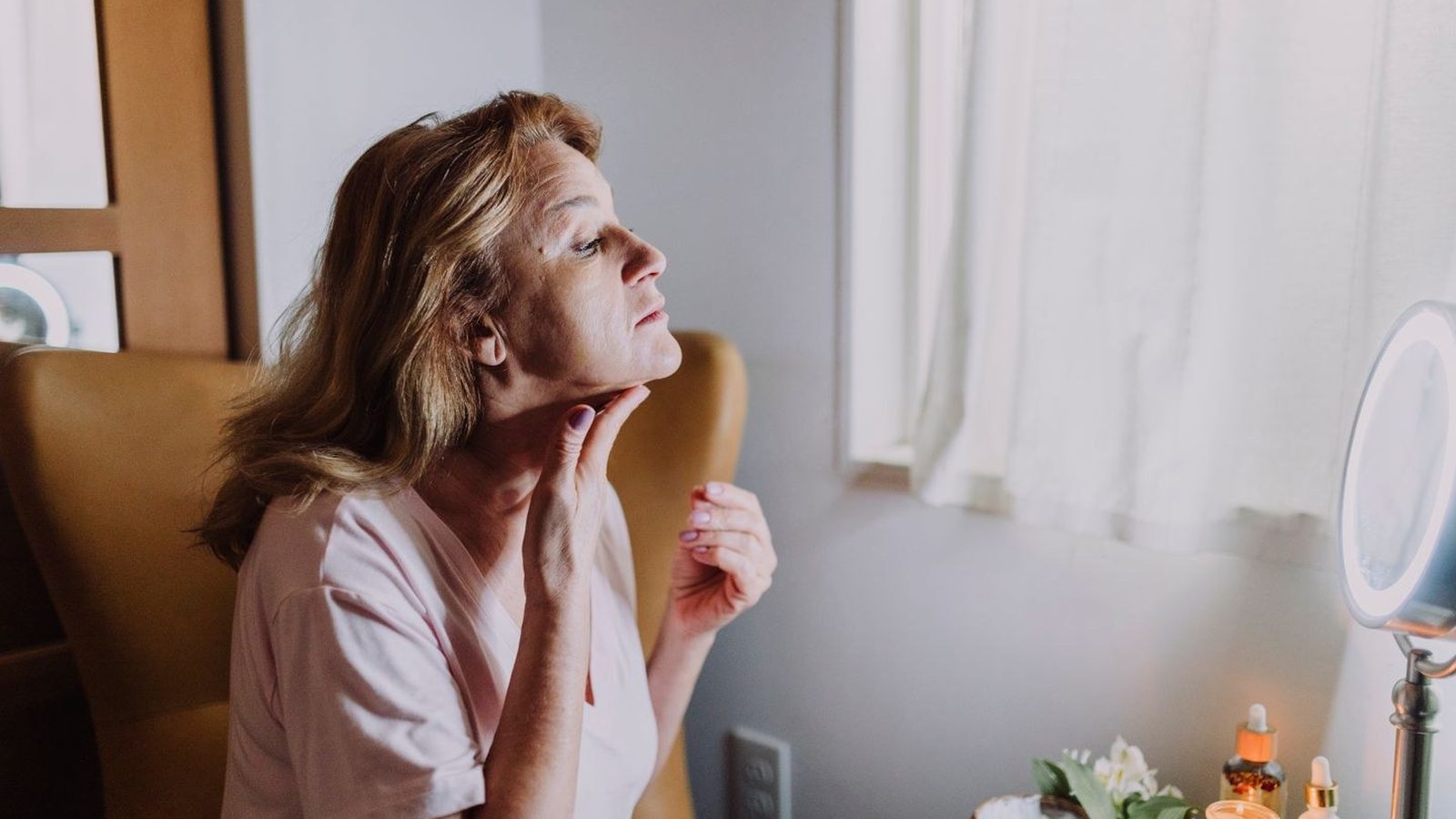
Women describe the skin change around menopause as sudden, and they are consistently told that aging is gradual. Both statements can be true, because what happens to dermal collagen in the first years after the menopausal transition is unlike any other period in adult life. Understanding the shape of that curve changes what you do about it.
Explore SKINVIVE™ by JUVÉDERM® for cheek skin smoothness with Dr. Frisch.
What estrogen was doing for your skin
Estrogen receptors are present throughout the skin, on fibroblasts, keratinocytes, and the structures of the hair follicle. Estrogen supports fibroblast proliferation and collagen synthesis, contributes to dermal water-binding through hyaluronic acid production, maintains barrier lipids, and influences the microvasculature that keeps skin looking perfused rather than sallow.
When estrogen falls, all of that changes at once. This is why the presentation is rarely a single complaint. Patients report thinner, drier, more reactive skin, a loss of firmness along the jawline and neck, slower healing from minor injuries, and often changes in hair density in the same window. It reads as several separate problems and it is one signal.
The shape of the curve
The frequently cited figure is that roughly thirty percent of dermal collagen is lost in the first five years after menopause, with a slower annual decline of about two percent per year thereafter. Individual studies vary and the precise numbers should be held loosely, but the pattern is consistent across the literature and matches what patients describe: a steep drop followed by a shallower slope.
That shape explains the clinical experience. A woman who felt her skin was holding up well at fifty-one can genuinely find it noticeably different at fifty-four, and telling her that aging is gradual is both technically true and unhelpful. It also explains why the perimenopausal years are the highest-value window for intervention, because you are working against the steep section rather than after it.
What else is happening at the same time
Menopause rarely arrives alone. Thyroid disorders become more common in the same decade and produce overlapping skin and hair symptoms, which is why I evaluate thyroid function in any woman presenting with this cluster rather than assuming the obvious explanation. Body composition shifts toward reduced insulin sensitivity, which accelerates glycation of the collagen that remains. Sleep quality frequently deteriorates, which reduces overnight repair capacity. Cortisol patterns often change.
This is the point where an endocrine perspective earns its place in an aesthetic conversation. Treating the skin surface while a thyroid problem goes unrecognized produces a partial result that patients understandably interpret as the treatment failing.
What genuinely helps
Topical support becomes more important, not less. Retinoids remain the best-evidenced topical for dermal collagen, though menopausal skin is more reactive and usually needs slower titration alongside serious barrier repair. A physician-directed regimen matters here precisely because the margin for irritation has narrowed.
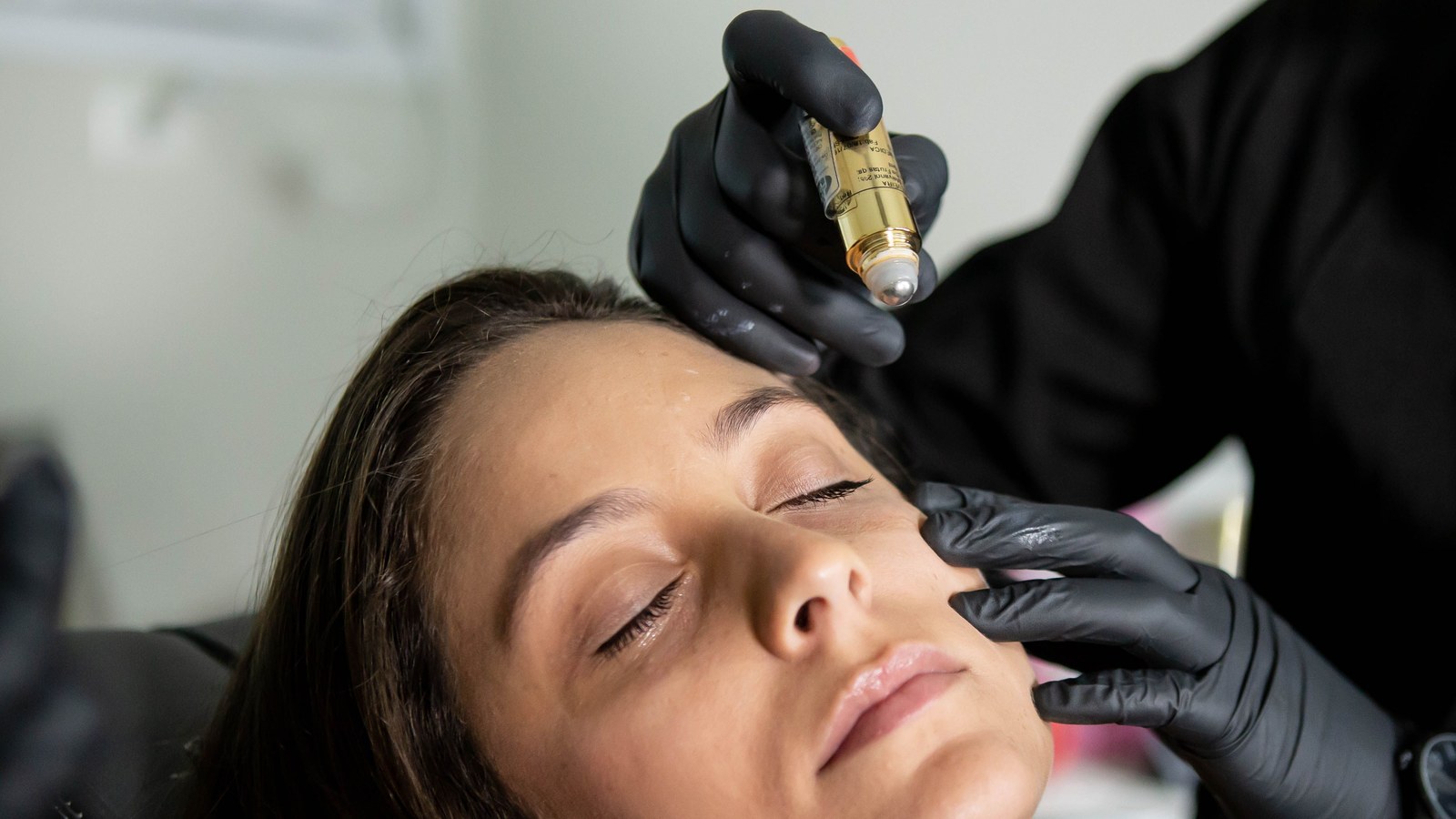
In-office collagen stimulation is well suited to this stage. Microneedling with PRP provides the mechanical and growth-factor signal, and facial laser addresses the pigment, redness, and vascular changes that make postmenopausal skin read as older independent of its structure. Sessions are typically spaced a little more generously because healing is slower, and expecting the same recovery timeline as a thirty-five-year-old sets patients up for frustration.
The internal side deserves real attention: protein intake at a deliberate target, vitamin C sufficiency, resistance training for both insulin sensitivity and anabolic signaling, and sleep treated as clinical rather than optional. Where hormone therapy is being considered for menopausal symptoms, its effects on skin are a legitimate part of that discussion, though it is a decision made on the whole clinical picture and not on skin alone. That conversation belongs in a consultation, not an article.
Setting expectations honestly
Collagen stimulation in postmenopausal skin works. It works somewhat more slowly than in a forty-year-old, because fibroblast responsiveness has declined and the hormonal support behind it has diminished. Most patients see firmness and tone improve over three to four months rather than two, and the maintenance rhythm afterward is closer than it would be for a younger patient.
What it does not do is restore the skin of a decade earlier, and I would rather say that at the consultation than have a patient discover it at month four. Photographs shared by our practice are unretouched and represent individual results. The goal in this stage of life is usually skin that looks well-supported, even, and healthy for its age, and that is a realistic and satisfying target.
Where to start
If your skin has changed noticeably in the last few years and you are somewhere in the menopausal transition, the useful first step is a consultation that looks at both sides at once: the skin itself and the internal picture behind it. If a thyroid or metabolic contributor is present, addressing it makes everything else work better. If it is not, you have ruled it out and can proceed with confidence.
From there, the plan is the same architecture we use for any collagen patient, weighted for this stage of life and sequenced over months rather than weeks.
Frequently Asked Questions
- How much collagen is lost after menopause?
- The commonly cited figure is roughly thirty percent of dermal collagen in the first five years after menopause, followed by about two percent per year. Individual studies vary, but the pattern of a steep early drop followed by a shallower decline is consistent.
- Why did my skin change so quickly?
- Because estrogen supports fibroblast activity, hyaluronic acid production, barrier lipids, and microvascular perfusion at the same time. When it falls, several skin functions change together, which is experienced as a sudden shift rather than gradual aging.
- Do collagen treatments still work after menopause?
- Yes, with a longer timeline. Fibroblast responsiveness has declined, so most patients see change over three to four months rather than two, and maintenance is scheduled more closely than for a younger patient.
- Should I have my thyroid checked?
- It is worth discussing. Thyroid disorders become more common in the same decade and produce overlapping skin and hair symptoms, so we evaluate thyroid function when the history suggests it rather than assuming menopause explains everything.
Medical disclaimer: This article is for educational purposes only and is not a substitute for a personal medical consultation. Individual results vary. A consultation is required to determine candidacy for any treatment.
VitellaMD disclaimer: VitellaMD products are dietary supplements. They are not intended to diagnose, treat, cure, or prevent any disease. These statements have not been evaluated by the FDA.
Dr. Anna Frisch, MD, PhD
Board-Certified Endocrinologist | Emory University School of Medicine-trained physician-scientist | Medical Director, Palm Beach Cosmetic Medicine | Founder, VitellaMD, Palm Beach Thyroid & Endocrinology Wellness, and Frisch Integrative Medicine
Dr. Anna Frisch, MD, PhD, is a board-certified endocrinologist, Emory University School of Medicine-trained physician-scientist, Medical Director of Palm Beach Cosmetic Medicine, and founder of VitellaMD, Palm Beach Thyroid & Endocrinology Wellness, and Frisch Integrative Medicine. Her research is cited internationally, and she brings decades of experience in endocrinology, thyroid disorders, hormones, metabolic health, and patient-centered care. At Palm Beach Cosmetic Medicine, Dr. Frisch applies her medical background to aesthetic wellness by looking beyond the surface, connecting skin health, hair health, hormone balance, metabolic wellness, nutrition, collagen support, and advanced cosmetic treatments to help patients look refreshed, confident, and natural.
Not sure where to start?
Get your complimentary Skin IQ: a physician-led AI skin analysis with personalized recommendations in minutes.

Refined, physician-led cosmetic care in Wellington.
Schedule a private consultation to design a treatment plan around your skin, your goals, and the way you want to look and feel.