Patients tell me PRP did not work for them more often than you would expect, and they are usually describing something real. What they are rarely describing is a failure of the biology. In almost every case I can trace the disappointment to one of three things: how the plasma was prepared, what was never evaluated beforehand, or the absence of any schedule at all.
Failure mode one: a weak preparation
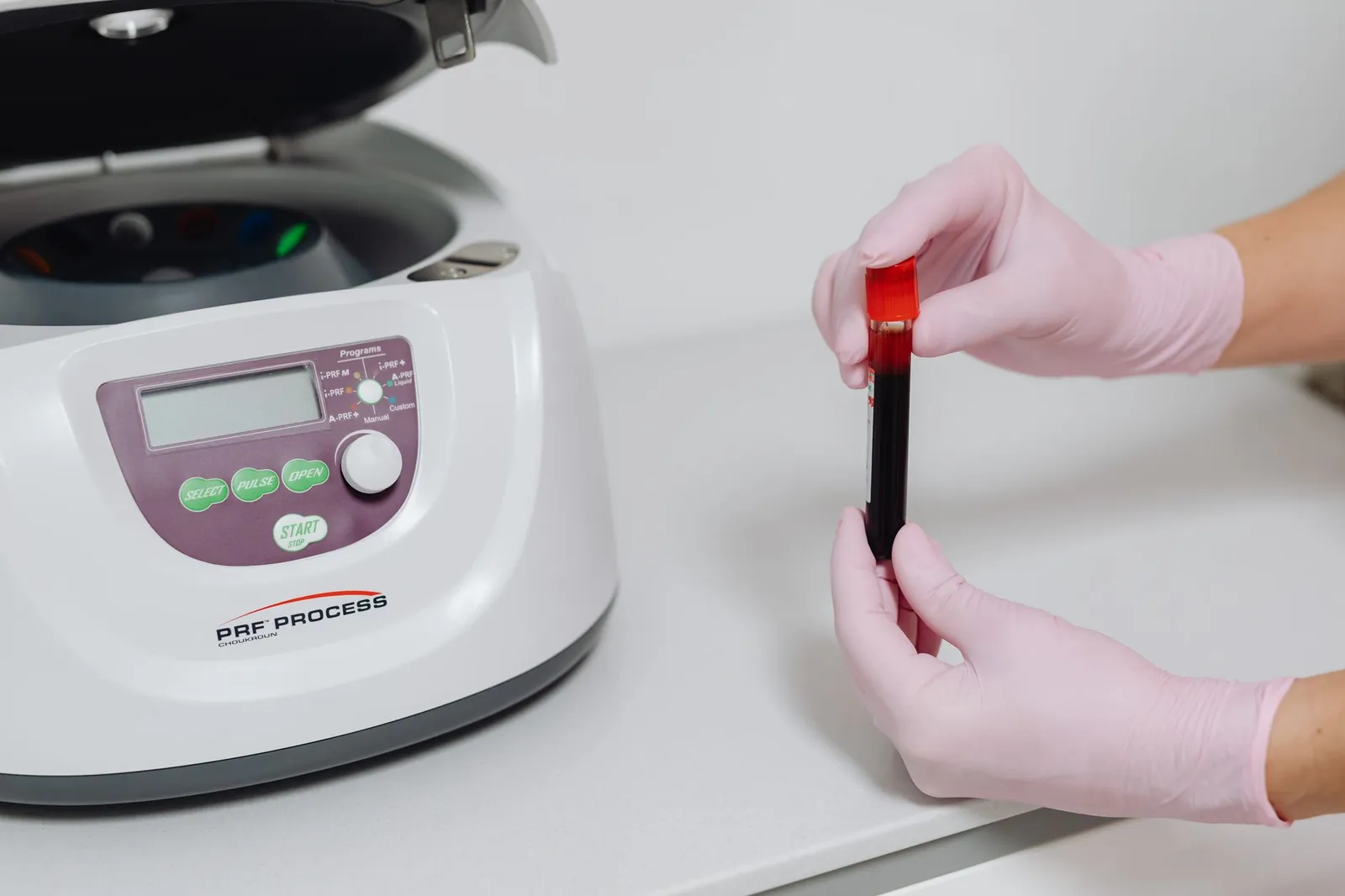
PRP is not a standardized product, and that single fact explains more disappointing outcomes than anything else. Two practices can honestly advertise the same treatment and put materially different things into the syringe, because what you get depends entirely on the system used to concentrate it.
Inexpensive single-spin systems produce a modest platelet concentration and leave a substantial load of red blood cells behind. Platelets are the entire point of the treatment. They carry the growth factors that signal the follicle environment, and a preparation with a low platelet count delivers a correspondingly weak signal. No amount of careful injection technique compensates for a dilute concentrate.
What platelet concentration and red cell contamination actually mean
In plain language: your blood contains red cells, white cells, platelets, and plasma. A centrifuge separates them by density. The goal of a good PRP preparation is to collect a high proportion of the platelets into a small volume of plasma while leaving the red cells behind, because red cells contribute nothing therapeutic and their breakdown products are inflammatory in the tissue where they land.
A basic spin captures some of the platelets and carries a lot of red cells along with them. A serious concentrating system captures far more of the platelets, reaching what is described as a supraphysiologic concentration, meaning well above the level found in whole blood, while removing over 99% of the red cells. The result is more growth factor signal per session and, for most patients, a cleaner and more comfortable treatment.
This is why I am specific with patients about the system we use rather than simply saying we offer PRP. Our preparations are concentrated on the EmCyte PurePRP SupraPhysiologic system, an advanced FDA-cleared concentrating system used at the point of care. To be precise about the language, the device is FDA-cleared as a concentrating system. PRP is not FDA-approved as a treatment for hair loss, and I would rather say that plainly than let a marketing phrase do the work.
Failure mode two: nobody asked why the hair is thinning
Hair loss is a symptom. Treating it without asking what is producing it is the aesthetic equivalent of treating a fever without looking for the infection, and it is remarkably common in settings where the treatment is sold before the question is asked.
Thyroid dysfunction, androgen patterns, low ferritin, vitamin D insufficiency, insulin resistance, recent rapid weight loss, postpartum hormonal shifts, and several widely prescribed medications all suppress hair growth. Frequently more than one is present at the same time. If an active internal driver is left unexamined, every session is working against a headwind that no injection can overcome.
I cannot promise that an evaluation will always identify a cause. Hair loss is often multifactorial, and in a fair number of patients the workup is unremarkable and the genetic pattern is the dominant story. That is still worth knowing, because it changes what we expect and how we talk about the timeline. What I will not do is skip the question.
Failure mode three: no protocol and no maintenance
Hair follicles cycle over months. A treatment plan built around whenever a patient happens to rebook does not match that biology, and neither does a plan that ends the moment a pre-paid package runs out.
The patients who see the least are usually the ones treated sporadically. The patients who see the most are on a defined cadence, typically a series of three to four sessions spaced four to six weeks apart, followed by maintenance at intervals set for their response. Follicles that respond need continued signal. When the signal stops, the early gains fade, and from the outside it looks like the treatment stopped working rather than that the plan ended.
What a protocol changes
A protocol is not a marketing word. It is the decision to fix all three variables at once instead of one of them, and to fix them in advance rather than improvising per visit.
It means the evaluation happens before the first injection, so the treatment is working with your physiology rather than against something nobody looked for. It means the preparation is standardized on a serious concentrating system, so the dose of growth factors is consistent from session to session. It means the schedule is set to the follicle cycle and written down, and it means maintenance is part of the plan from the beginning rather than an afterthought once results start slipping.
It also means the response is measured. We photograph under consistent conditions at intervals, because gradual change is genuinely difficult to judge when you see your own scalp every day. When a patient is not responding as expected, that becomes the conversation instead of another quiet round of the same treatment.
What to expect, honestly
Change is gradual. Most patients notice reduced shedding first, often within the first couple of months, with visible density developing from about three to four months and results assessed at six months. Individual results vary, and PRP is not a cure for hair loss or a guarantee of regrowth.
There is no surgery and no meaningful downtime. Sessions run under an hour, topical numbing is used, and most patients go back to the rest of their day immediately. Some patients are better served by a dermatology or surgical referral, and where that is the honest recommendation, that is what they hear at the visit.
The Root Cause Hair Restoration Protocol
This is the reasoning behind the program we built at Palm Beach Cosmetic Medicine. The Root Cause Hair Restoration Protocol begins with endocrine-informed evaluation, delivers customized PRP prepared on the EmCyte PurePRP SupraPhysiologic system, runs as a structured physician-supervised series, and continues into a maintenance plan with medical support where it is warranted.
If you have tried PRP elsewhere and concluded it does not work, I would encourage you to look at which of the three failure modes applied to your experience before you write off the treatment. You can read the full protocol on our Root Cause Hair Restoration Protocol page, or see the range of applications on our PRP and PRF page.
Frequently Asked Questions
- Why did PRP not work for me somewhere else?
- Usually one of three reasons: the plasma was prepared on a weak single-spin system, nobody evaluated why the hair was thinning, or the sessions were not delivered on a structured schedule with maintenance. All three are fixable, and none of them means PRP cannot help you.
- Does the preparation system really make a difference?
- It determines what is in the syringe. A serious concentrating system produces a supraphysiologic platelet concentration and removes over 99% of red blood cells, which means more growth factor signal per session and a cleaner preparation than a basic spin provides.
- Is PRP FDA-approved for hair loss?
- No. Our PRP is prepared using an advanced FDA-cleared concentrating system, and it is used for hair restoration as a physician-directed treatment. Individual results vary, and PRP is not a cure for hair loss.
- How long before I see anything?
- Most patients notice reduced shedding within the first couple of months and see visible density changes from about three to four months, with results assessed at six months. We photograph at intervals rather than relying on memory, because the change is gradual. Individual results vary.
Dr. Anna Frisch, MD, PhD
Board-Certified Endocrinologist | Emory University School of Medicine-trained physician-scientist | Medical Director, Palm Beach Cosmetic Medicine | Founder, VitellaMD, Palm Beach Thyroid & Endocrinology Wellness, and Frisch Integrative Medicine
Dr. Anna Frisch, MD, PhD, is a board-certified endocrinologist, Emory University School of Medicine-trained physician-scientist, Medical Director of Palm Beach Cosmetic Medicine, and founder of VitellaMD, Palm Beach Thyroid & Endocrinology Wellness, and Frisch Integrative Medicine. Her research is cited internationally, and she brings decades of experience in endocrinology, thyroid disorders, hormones, metabolic health, and patient-centered care. At Palm Beach Cosmetic Medicine, Dr. Frisch applies her medical background to aesthetic wellness by looking beyond the surface, connecting skin health, hair health, hormone balance, metabolic wellness, nutrition, collagen support, and advanced cosmetic treatments to help patients look refreshed, confident, and natural.
Not sure where to start?
Get your complimentary Skin IQ: a physician-led AI skin analysis with personalized recommendations in minutes.

Refined, physician-led cosmetic care in Wellington.
Schedule a private consultation to design a treatment plan around your skin, your goals, and the way you want to look and feel.