How Long Does PRF Actually Last? An Honest Answer
Almost every page says PRF lasts twelve to eighteen months, and almost none of them cite anything. We traced the number to its source and looked at what the human studies actually report.
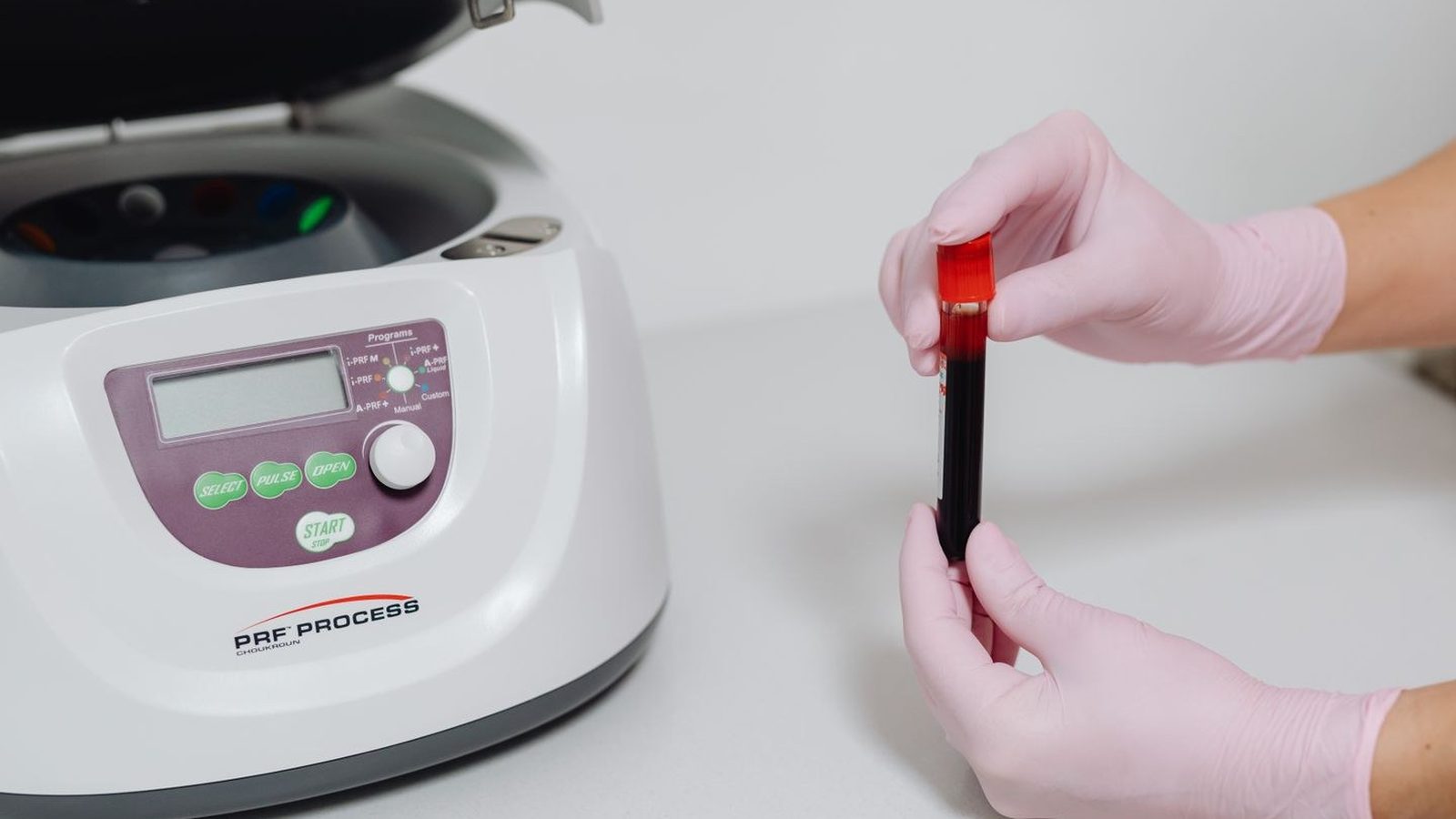
Search for how long PRF lasts and you will find the same number on almost every page: twelve to eighteen months. Some sites say up to two years. Almost none of them cite anything. We went looking for where that number came from, because patients ask us this question at nearly every consultation and we would rather answer it accurately than repeat what everyone else says.
Where the twelve-to-eighteen-month figure comes from
PRF bio-filler is made by warming the plasma layer from your own blood draw so the albumin in it forms a gel, then recombining that gel with liquid PRF. The durability claim traces back to preclinical work on how long denatured albumin persists after implantation, which is roughly four to six months in animal models.
That is a laboratory observation about a protein, not a clinical finding about how long a person's under-eye area looks different. Somewhere between that research and the marketing pages, four to six months became twelve to eighteen, and then it became the number everyone repeats.
What the human studies actually show
The most rigorous synthesis available is a 2025 systematic review published in the Journal of Cosmetic Dermatology, which examined fourteen studies comparing platelet-rich plasma and platelet-rich fibrin for rejuvenation of the area around the eyes.
Two findings from that review matter for this question.
First, the review concluded that the current evidence does not support the superiority of one preparation over the other. Second, and more directly relevant here, it found that PRF improvements often diminished by six months, while PRP outcomes for pigmentation were better sustained over similar intervals.
Most of the human studies in this field follow patients to about the six-month mark. Beyond that, the honest answer is that nobody has published the data.
Why we will not put a number on our website
We could write twelve to eighteen months on this page. It would match our competitors, it would probably convert slightly better in the short term, and no regulator would likely ever notice.
We are not going to, for two reasons.
The first is that it would be untrue, and a claim you cannot substantiate is a claim you should not make. The second is more practical: a patient who is told to expect eighteen months and sees change fading at six months concludes that the treatment failed and that we oversold it. Nothing damages a practice faster than a patient who feels misled, and nothing is easier to avoid.
What we tell patients instead
Regenerative treatments work on a schedule rather than in a single visit. We plan a series, we photograph under consistent conditions so the assessment is not left to memory, and we reassess at defined intervals rather than waiting for you to notice something has changed.
If your response fades sooner than expected, that becomes the conversation. If it holds longer, the maintenance interval stretches. Either way you are working from what actually happened rather than from a number printed on a website.
The question worth asking any practice
If a practice tells you how long your results will last, ask them what they are basing it on. A good answer names a study or says plainly that the evidence is limited. A poor answer repeats the number more confidently.
That single question tells you a great deal about how the rest of your care will be handled.
Physician-designed, at Palm Beach Cosmetic Medicine
Every regenerative protocol at Palm Beach Cosmetic Medicine is designed and supervised by Dr. Anna Frisch, MD, PhD, a board-certified endocrinologist, who performs every PRP injection herself. Consultations are complimentary, and pricing is discussed at your visit once we know what you actually need.
There is no FDA-approved indication for PRF in aesthetic treatment. Its use here is off-label under the practice of medicine, which is lawful and standard. Individual results vary.
Frequently Asked Questions
- How long does PRF last?
- Most human studies in this field follow patients to about the six-month mark, and a 2025 systematic review in the Journal of Cosmetic Dermatology found that PRF improvements often diminished by six months. Beyond that, the honest answer is that nobody has published the data, which is why we do not publish a duration figure. Individual results vary.
- Where does the twelve-to-eighteen-month claim come from?
- It traces back to preclinical work on how long denatured albumin persists after implantation, which is roughly four to six months in animal models. That is a laboratory observation about a protein, not a clinical finding about how long a person's under-eye area looks different.
- Is PRF better than PRP?
- The 2025 systematic review concluded that the current evidence does not support the superiority of one preparation over the other. It did find that PRP outcomes for pigmentation were better sustained over similar intervals.
- Is PRF FDA-approved?
- There is no FDA-approved indication for PRF in aesthetic treatment. Its use here is off-label under the practice of medicine, which is lawful and standard.
- How do you decide when to retreat?
- We plan a series, we photograph under consistent conditions so the assessment is not left to memory, and we reassess at defined intervals. If your response fades sooner than expected, that becomes the conversation. If it holds longer, the maintenance interval stretches.
Dr. Anna Frisch, MD, PhD
Board-Certified Endocrinologist | Emory University School of Medicine-trained physician-scientist | Medical Director, Palm Beach Cosmetic Medicine | Founder, VitellaMD, Palm Beach Thyroid & Endocrinology Wellness, and Frisch Integrative Medicine
Dr. Anna Frisch, MD, PhD, is a board-certified endocrinologist, Emory University School of Medicine-trained physician-scientist, Medical Director of Palm Beach Cosmetic Medicine, and founder of VitellaMD, Palm Beach Thyroid & Endocrinology Wellness, and Frisch Integrative Medicine. She is one of the few board-certified endocrinologists in the US leading a cosmetic medicine practice. Her research is cited internationally, and she brings decades of experience in endocrinology, thyroid disorders, hormones, metabolic health, and patient-centered care. At Palm Beach Cosmetic Medicine, Dr. Frisch applies her medical background to aesthetic wellness by looking beyond the surface, connecting skin health, hair health, hormone balance, metabolic wellness, nutrition, collagen support, and advanced cosmetic treatments to help patients look refreshed, confident, and natural.
Not sure where to start?
Get your complimentary Skin IQ: a physician-led AI skin analysis with personalized recommendations in minutes.


Refined, physician-led cosmetic care in Wellington.
Schedule a private consultation to design a treatment plan around your skin, your goals, and the way you want to look and feel.